

What Are Dry Baths?
Dry baths, sometimes called heat blocks, are laboratory devices used to maintain samples at a constant temperature for various applications. They consist of a block or chamber that holds sample tubes, plates, or vials, surrounded by a heating or cooling element. Dry baths are commonly used in molecular biology, biochemistry, and microbiology laboratories for a wide range of tasks.
What Dry Baths Are Available in the Wet Lab Makerspace?
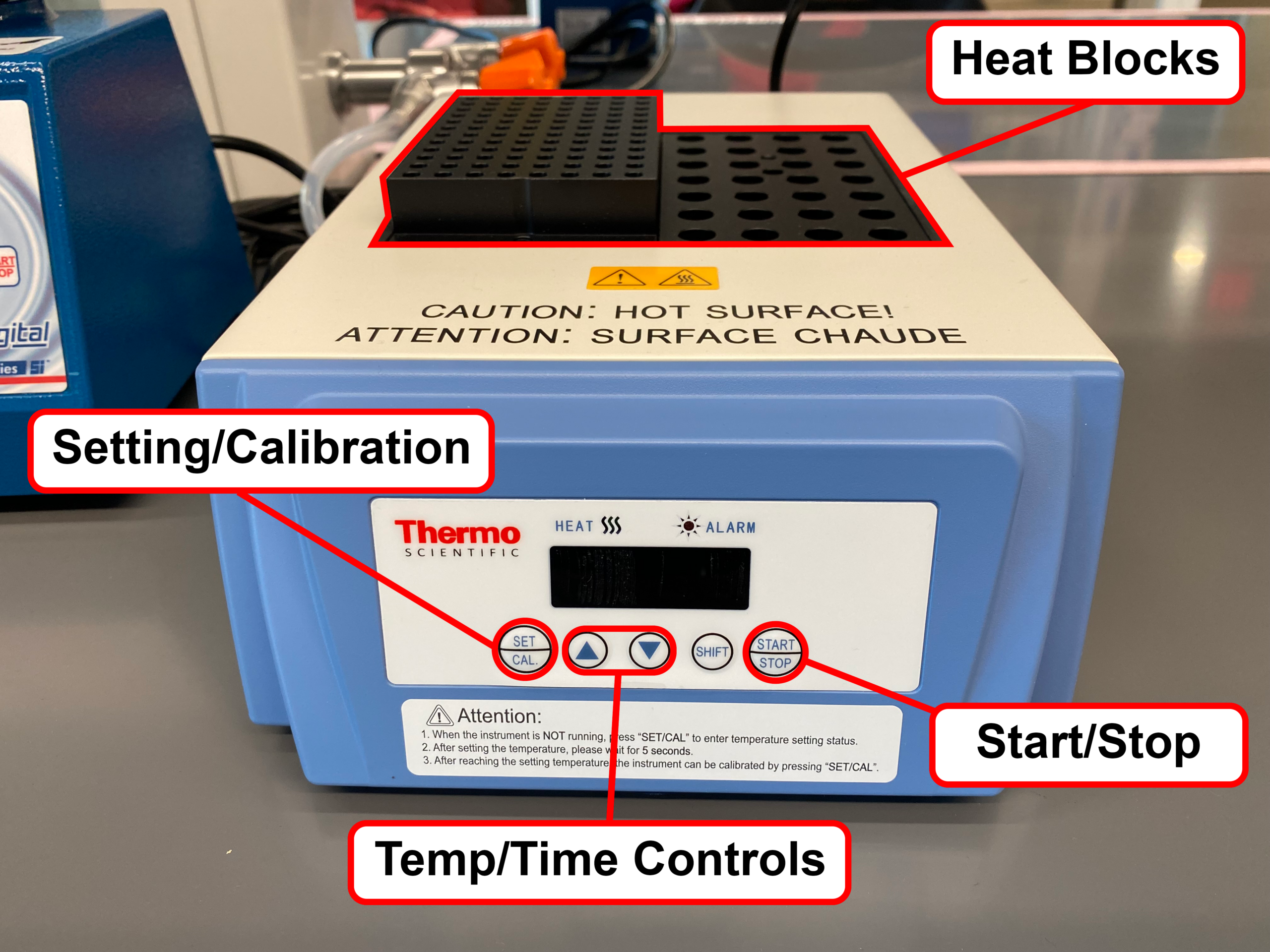
The dry baths in the Wet Lab Makerspace look like this. They may contain one or two heat blocks, which are interchangeable.
Safety Considerations
Tips for Success
- Pre-equilibration: This device can take a while to change temperature. To achieve optimal results, turn the device on and allow the temperature to equilibrate well in advance of your experiment.
Operating Instructions
1. Choose an Appropriate Block
Choose a block that will fit your tubes and place it in the bath.
2. Turn the Device On
Ensure the dry bath is plugged into a suitable power source and switch it on using the Power button or switch.
3. Set the Temperature
Set the desired temperature using the temperature controls or digital display. Adjust the temperature according to your experimental requirements.
4. Pre-Heating
Allow the dry bath to preheat to the set temperature. This may take some time depending on the model and desired temperature.
5. Sample Placement
Place your sample tubes, plates, or containers into the block. Arrange them evenly and ensure good contact with the heating surface for uniform heating.
6. Monitor the Temperature
Periodically monitor the temperature of the heat block using a calibrated thermometer to ensure it remains stable and accurate.
7. Remove Samples
When your procedure is complete, remove your samples. Use insulated gloves if they are too hot to handle.
8. Cool Down and Turn Off
Switch off the dry bath and allow it to cool down before handling or cleaning.