

What is a CO₂ Incubator?
A CO₂ incubator is a laboratory device used to grow and maintain cell cultures by providing a controlled environment that mimics the conditions found within the human body. These conditions typically include precise control of temperature, humidity, and carbon dioxide (CO₂) levels. CO₂ incubators are essential for a wide range of biological and medical research, including tissue culture, cell biology, and microbiology.
What Kind of CO2 Incubator is available in the Wet Lab Makerspace?
In the Wet Lab Makerspace, we have a HERAcell 150i CO₂ Incubator.
It is located in the Tissue culture room.
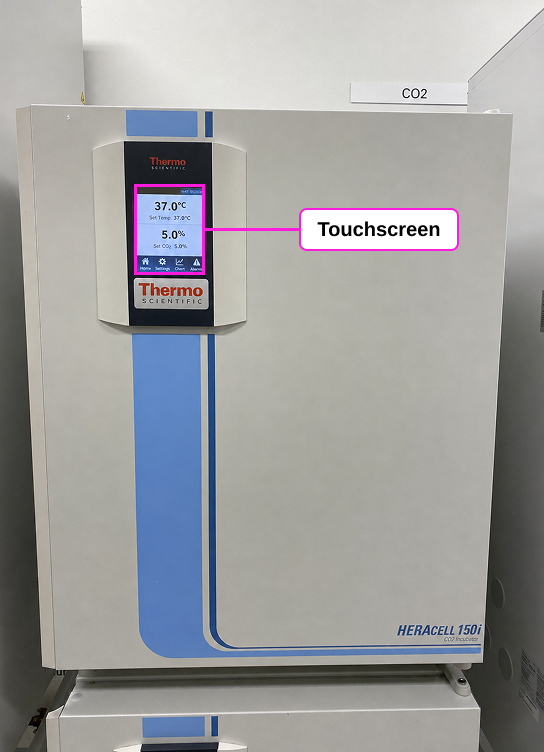 | 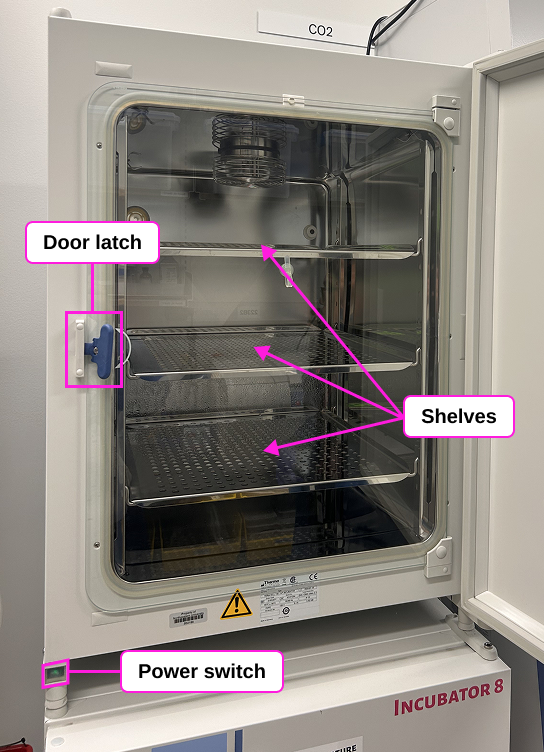 |
Safety Considerations
Tips for Success
- Stable Temperature: Allow the incubator to reach and stabilize at the desired temperature before placing your samples inside.
- Humidity Control: Keep the door closed as much as possible to maintain humidity and prevent fluctuations.
- CO2 Concentration: Regularly check CO₂ levels and adjust as necessary to maintain the proper pH in your culture media.
- Aseptic Technique: Use aseptic techniques when placing or removing items to minimize the risk of contamination.
Operating Instructions
1. Turn the device on
To begin using the CO₂ Incubator, Connect the incubator to a properly grounded electrical outlet using the power cord provided.
2. Temperature Calibration
Set the desired temperature (typically 37°C) using the control panel. Allow the incubator to reach the set temperature and stabilize.
3. Co2 Calibration
Adjust the regulator to the correct pressure (usually around 15 psi). Use the control panel to set the CO₂ concentration (typically 5%). The incubator will automatically calibrate the CO₂ levels.
4. Sample Preparation
Prepare your samples in culture dishes, flasks, or plates as needed.
5. Placement of the Samples
Arrange the samples on the shelves inside the incubator. Ensure there is adequate space between samples for air circulation.
6. Load the samples
Transfer the cell mixture into the electroporation cuvette or electrode chamber. Place the cuvette or chamber into the holder on the electroporator.
7. Run the cycle – Operation
Regularly check the temperature display to ensure it remains at the set point and Check the CO₂ display to ensure it remains at the set concentration.
8. Post cycle
Take the samples out while maintaining aseptic environment to ensure minimal contamination.
9. Clean-up
Clean the interiors on a regular basis
ADDITIONAL RESOURCES
User manual: